Peafowl
Origin
Peafowl are large, colorful birds native to South Asia. The most well-known species is the Indian Peafowl (Pavo cristatus), which is native to India and Sri Lanka. They have been kept and admired by people for thousands of years, often seen in palace gardens, temples, and cultural artworks.
Other species include the Green Peafowl (Pavo muticus), found in Southeast Asia, and the Congo Peafowl (Afropavo congensis), native to the rainforests of central Africa.
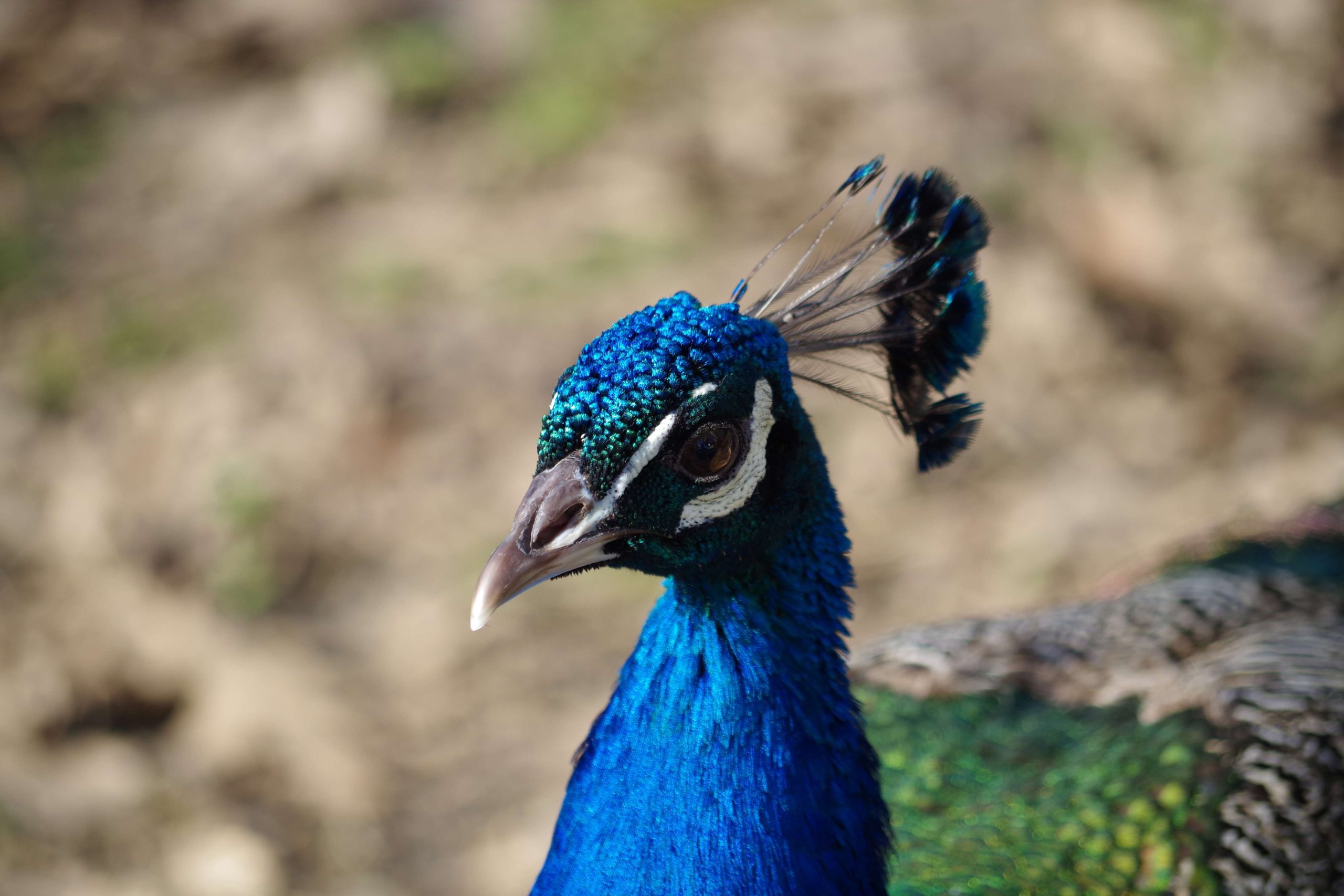
The Indian Peafowl, with the striking blue-green plumage of the males (peacocks), is the national bird of India and the species most commonly seen in farms, parks, and zoos worldwide.
Life Span
-
In the wild: 10–25 years
-
In human care (domesticated): 40–50 years
Fun Facts
-
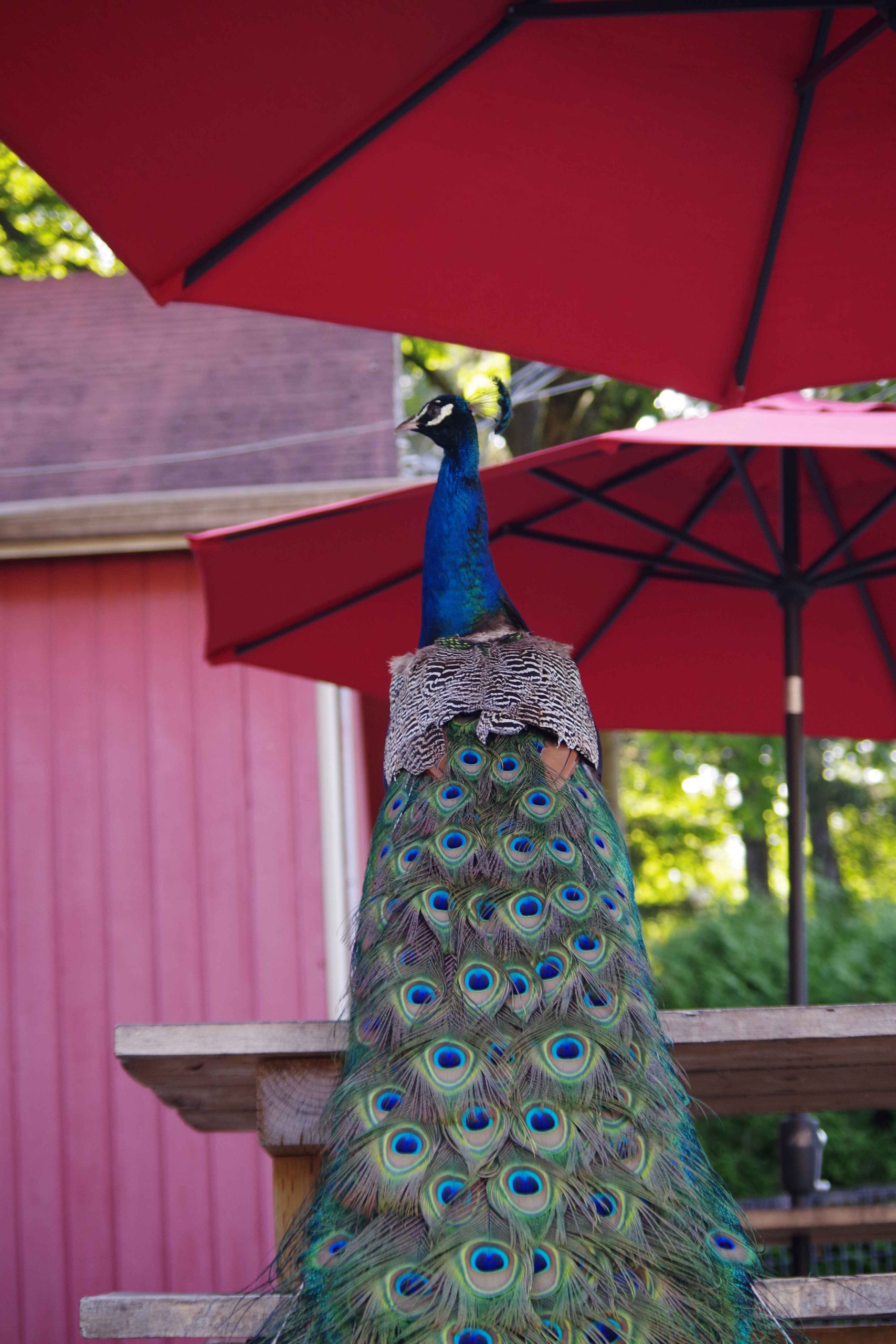
The peacock’s most prevalent mating ritual is the presentation of its train. Males spread their tails in a fan form and strut back and forth, making a rattling noise with their feathers. This catches the peahen’s attention, and then she is free to choose her preferred male.
-
After mating, the peahen will lay a clutch of 3-6 eggs.
-
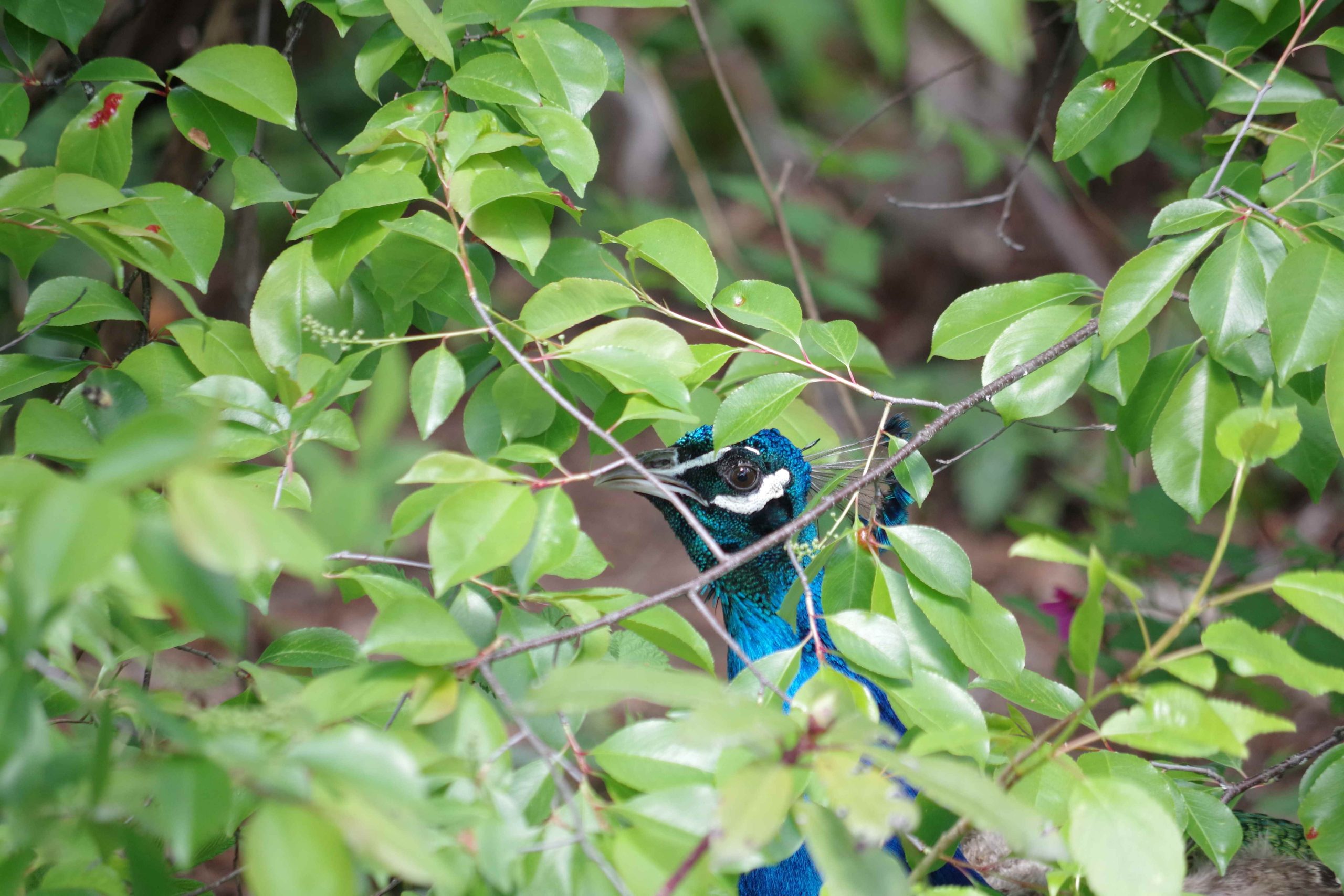
Peafowl love to spend time in bushes and forested areas where they hide from huge predators and have trees in which they can roost.
-
Peafowl tend to shed their feathers naturally in a process called “molting”. The shedding process begins every year after mating season, between February and August.
Terminology
-
Male – Peacock
-
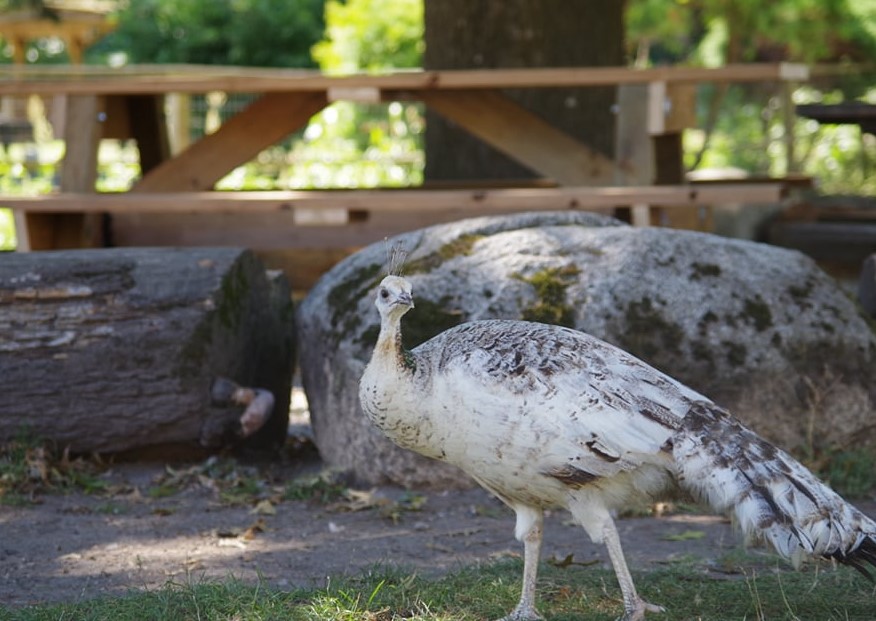
Female – Peahen
-
Young – Peachick